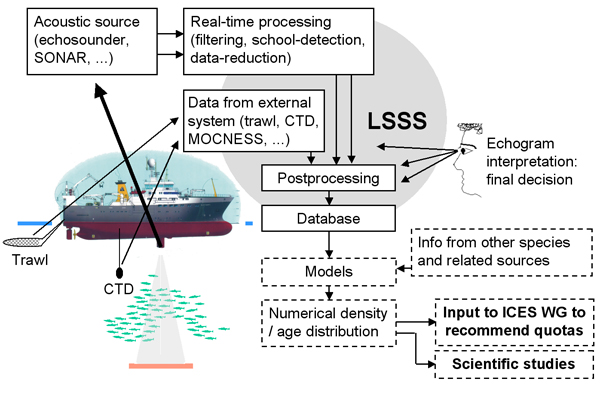
LSSS: work process overview
Acoustic data are the basis for estimating fish stock abundance of many marine species. Sometimes there are so much data that these have to be processed partly in real time. The collected data are interpreted aided by additional information, i.e. trawl catches. The results are stored as acoustic abundance, which in turn is used as the basis to estimate the size of the fish stocks and recommendation of fishing quotas. The figure below show one possible workflow from data collection to recommended fishing quotas. Although the data flow is general, not all authorities work like this.